
Soldering is one of those skills that quietly separates people who can fix things from people who throw things away. At first glance, it looks technical and unforgiving — molten metal, hot tools, tiny parts — but in reality, soldering is a slow, learnable craft built on a few repeatable principles. Once those principles click, the process becomes predictable instead of frustrating.
This guide is written for absolute beginners who want to learn how to solder properly, whether that means fixing a broken wire, replacing a switch, repairing electronics, or attempting something less common like jewelry repair. The goal here isn’t just to explain the steps, but to help you understand why things work — and why they often don’t — so you don’t give up after your first few attempts.
What Soldering Is, in Practical Terms
Soldering is the process of joining metal parts using a filler metal (solder) that melts at a lower temperature than the parts being joined. The solder flows between clean, heated metal surfaces and bonds to them when cooled. The result is a joint that can be both mechanically strong and electrically conductive.
What matters most is that soldering does not rely on brute force or extreme heat. In fact, many beginners use too much heat and cause more problems than they solve. Soldering works best when heat is applied just long enough to let the solder flow naturally.
Understanding this early prevents most frustration.
What Soldering Is Not (and Why This Matters)
A lot of beginner confusion comes from mixing up soldering with other joining methods.
Soldering is not:
- Welding — Welding melts the base metals themselves and fuses them together. This requires extremely high temperatures and is unsuitable for electronics or jewelry. Soldering works at far lower temperatures, which is why it can be used on delicate components.
- Gluing metal together — Adhesives can bond certain metals or metal-to-plastic parts, but glue does not conduct electricity and often fails under heat or vibration. Solder becomes part of the metal joint itself.
- Simply melting solder onto a surface — If solder melts because it touched the iron, rather than because the metal joint is hot, the bond will be weak. These “cold joints” are the number one reason beginner soldering fails.
Good soldering is about heat transfer and surface chemistry, not just melting metal.
What You Can Solder (and What Surprises Beginners)
Many people assume soldering is only for circuit boards, but it’s far more versatile than that. You can solder a wide range of metals and components, provided you understand their limitations.
Common soldering applications include electrical wires, switches, and connectors. In household wiring and electronics, wire colors often indicate function, and clean solder joints prevent intermittent faults that can be very difficult to diagnose later.
Circuit boards and electronic components rely entirely on solder joints. Every resistor, capacitor, connector, and chip leg depends on solder to stay connected and functional.
Soldering is also useful for small metal repairs involving copper, brass, and thin steel parts. These metals accept solder well when properly cleaned and fluxed.
Jewelry repair is less common for beginners but very practical. Broken chains, clasps, and jump rings can often be repaired instead of replaced. Jewelry simply requires more care because the parts are small and heat-sensitive.
The Tools That Actually Affect Your Success
You don’t need a professional setup, but certain tools directly influence how easy or frustrating soldering will be.
A soldering iron is the most important tool. Temperature-controlled irons make learning much easier because they prevent overheating, especially when working on small or delicate pieces like jewelry or circuit boards.
Solder wire comes in different alloys and diameters. Thin solder gives you control and prevents flooding joints with excess metal. For electronics, rosin-core solder is common because it contains flux inside. For jewelry, external flux is usually more reliable.
A tip cleaner, such as a brass coil or damp sponge, keeps the iron transferring heat efficiently. A dirty tip cannot deliver heat properly, which leads to cold joints and frustration.
Flux is one of the most overlooked tools by beginners. Flux cleans oxidation from metal surfaces as they heat and allows solder to flow smoothly. Paste or gel flux is especially useful for jewelry because it stays in place instead of burning off immediately.
Clamps, helping hands, or locking tweezers prevent movement during cooling — something that matters far more than most beginners realize.
Flux: The Silent Difference Between Success and Failure
Flux isn’t optional if you want consistent results. Metal oxidizes instantly when heated, even if it looked clean moments earlier. Oxidation prevents solder from bonding properly.
Flux removes existing oxidation, prevents new oxidation during heating, and reduces surface tension so solder flows instead of forming beads.
Beginners often skip flux and assume the problem is their iron, solder, or skill level. In reality, flux solves most soldering problems immediately.
You only need a thin, visible layer — just enough to coat the surface. Too much flux creates mess, but too little causes solder to refuse to spread.
Understanding Solder: Why It Behaves the Way It Does
Solder is an alloy, usually tin-based, sometimes with lead, silver, or copper added. Different alloys melt at different temperatures and flow differently.
Lead-free solder requires higher heat and can feel harder to work with at first. Silver-bearing solder is stronger and often used in jewelry, but it also demands better heat control.
For beginners, the key is not strength but predictability. Thin solder wire gives you time to react and correct mistakes before the joint floods.
How a Proper Solder Joint Forms (What You Should See)
A correct solder joint forms when the metal parts are heated enough that solder melts on contact with them, not just from touching the iron. The solder should flow smoothly into the joint and form a shiny, slightly concave surface.
If solder sits on top of the joint like a blob, the metal wasn’t hot enough. If the joint looks dull or grainy, it cooled improperly or moved during cooling.
Learning to recognize these visual cues is more important than memorizing steps.
Step-by-Step: How Do You Solder Correctly?
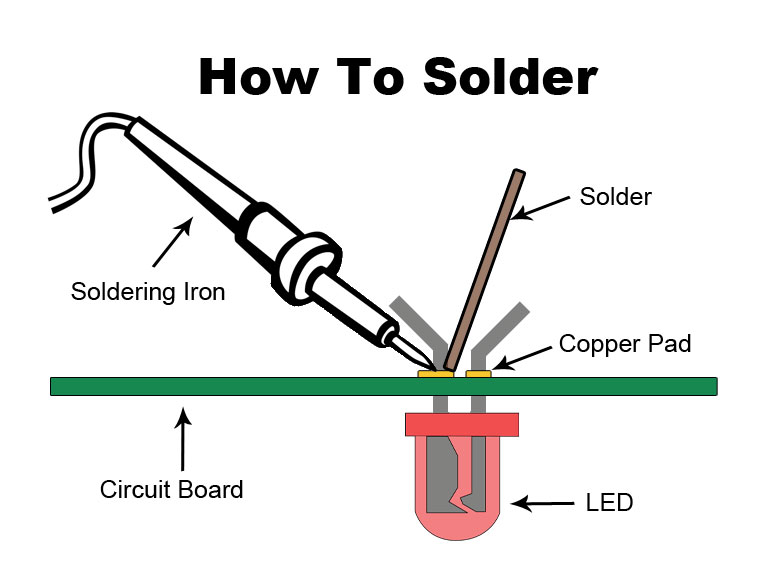
Start by cleaning the metal thoroughly. Sand, scrape, or file until the surface is shiny. Oils from your fingers can interfere with soldering, so wiping the area with isopropyl alcohol helps.
Next, secure the parts firmly. Helping hands, clamps, or locking tweezers work well. For jewelry, resting the piece on a ceramic tile or firebrick adds stability and heat resistance.
Apply a thin layer of flux to both surfaces. Visually, it should look like a light coating, not a thick paste.
Heat the joint by touching the iron so it contacts both metal parts at once. After a few seconds, touch solder to the joint. If it melts and flows smoothly, you’re at the right temperature.
Remove the solder first, then the iron. Let the joint cool naturally without movement.
Jewelry Repair: Why It’s Tricky but Doable
Jewelry heats up extremely fast. Thin chains can discolor or weaken if overheated, and clasps can unexpectedly come apart if their solder melts.
To manage this, use the lowest effective temperature, work quickly, and apply flux generously. Expect mistakes early — jewelry repair has a steeper learning curve, but the same principles apply.
If your first repair only lasts a short time, that’s normal. Each attempt improves your timing and heat control.
Where Most Beginners Go Wrong (Read This Before You Start)
Most soldering frustration comes from predictable mistakes that almost everyone makes early on.
One common issue is dirty metal. Solder will not bond to oxidation, dirt, or oils, no matter how hot the iron is.
Another frequent problem is insufficient heat at the joint. Beginners are often afraid of heat and remove the iron too quickly. The metal must be hot enough for solder to flow.
Too much solder is also common. More solder does not make a joint stronger; it usually makes it worse.
Moving the joint while cooling is another major issue. Even slight movement can crack the bond internally.
Finally, many beginners expect instant perfection. Soldering is a physical skill. It improves rapidly with repetition, not theory alone.
How to Practice Without Getting Discouraged
Practice on scrap materials before working on anything important. Old wires, broken electronics, and scrap jewelry are perfect.
Focus on consistency, not speed. Watch how the solder behaves. Learn what “right” looks like.
Short, regular practice sessions are better than long, frustrating ones.
Safety Basics That Actually Matter
Soldering irons burn instantly. Always return the iron to its stand. Ventilate your workspace to avoid inhaling fumes. Wash your hands afterward, especially if using leaded solder.
Never solder live circuits.
Why Learning to Solder Is Worth the Effort
Soldering changes how you interact with the world. Broken things become repairable. DIY projects become possible. Confidence builds quickly once the basics click.
Starting with a real repair — even a difficult one like jewelry — accelerates learning. You’re not just practicing; you’re solving real problems.
That’s how skills stick.
Complerte Soldering Kit for $59.99!!
For a list of tools every car owner should have CLICK HERE
Pingback: Essential Tools Every Homeowner and Car Owner Should Have -