
Scrap Wood & Pallet Projects That Actually Sell (And Why People Buy Them)
There is something strangely addictive about starting to work with scrap wood. At first, most people just see free material. Maybe an old pallet sitting behind a store. Maybe leftover boards from a renovation. Maybe fallen trees or rough saplings in the forest that could potentially become fencing, trellises, or rustic outdoor structures. But after a while, your brain starts changing. You stop looking at wood as garbage and start seeing future projects hidden inside it.
This is one reason woodworking becomes so appealing to many people. It combines creativity, practicality, problem-solving, and self-reliance in a way modern life often lacks. One pile of discarded lumber can potentially become raised garden planters, shelving, workbenches, signs, fencing, or even furniture. In a time where many store-bought products feel cheaply made and disposable, handmade wooden projects carry a kind of authenticity that people increasingly appreciate.
The internet is filled with “100 pallet ideas” articles, but many of those projects are unrealistic, decorative clutter that almost nobody actually buys. The projects that consistently perform well are usually practical. They solve real problems. They help organize spaces, improve gardens, decorate outdoor areas, or add rustic personality to homes and cabins. This is where scrap wood projects become genuinely interesting, because some of them can realistically evolve into side income or small-scale businesses.
What makes reclaimed wood especially powerful is that imperfections often become part of the appeal. Scratches, knots, uneven grain, weathering, and texture can actually increase character when used properly. Rustic woodworking does not demand factory perfection. In many cases, it rewards authenticity instead.
Before diving into the strongest project categories, it helps to visualize the types of builds that consistently attract attention from buyers and DIY enthusiasts alike.


Why Rustic Woodworking Has Become So Popular
Part of the appeal comes from exhaustion with mass-produced products. A surprising amount of modern furniture is made from thin particleboard, cheap veneers, and materials that feel temporary. Handmade wood projects feel heavier, stronger, and more personal by comparison.
There is also a growing cultural shift toward homesteading, gardening, self-sufficiency, and outdoor living. Even people living in suburban neighborhoods increasingly want raised beds, decorative fencing, vertical gardens, potting benches, and rustic outdoor decor. Social media has amplified this trend heavily. Cottage-style gardens, cabin aesthetics, and farmhouse woodworking have become enormously popular online.
At the same time, reclaimed wood creates visual warmth that perfectly manufactured materials often lack. Slight imperfections make projects feel human. This is important because beginner builders sometimes assume their work needs to look machine-perfect to have value. In reality, rough texture and handmade character are often exactly what buyers want.
That does not mean sloppy construction is acceptable. Structural strength still matters. But rustic woodworking gives beginners more room to grow because small imperfections can blend naturally into the aesthetic rather than ruining the project completely.
Raised Garden Planters Continue to Sell Extremely Well
Raised planters may be one of the best beginner woodworking projects available right now. Gardening has exploded in popularity, especially among people trying to grow vegetables, herbs, flowers, and patio gardens at home. Many older gardeners also prefer raised beds because they reduce bending and improve accessibility.
From a builder’s perspective, planter boxes are attractive because they are relatively straightforward structurally while still feeling valuable to buyers. A properly stained and reinforced raised planter can look surprisingly premium even when built largely from reclaimed lumber.
There are several reasons these projects work so well:
- They solve a practical problem
- They fit gardening trends
- They look visually substantial
- They can be customized easily
- They photograph well online
Many beginner builders underestimate how important reinforcement becomes once soil weight is involved. Wet soil becomes extremely heavy very quickly. This is where structural concepts like triangular reinforcement and corner bracing matter enormously. A weak planter may look fine initially but begin bowing outward once filled.
Another important lesson many builders learn is that finishing quality heavily influences perceived value. Sanding rough pallet wood, softening edges, and applying a good outdoor stain can completely transform the appearance. A rough unfinished planter may look temporary, while a dark walnut or cedar-stained version suddenly looks intentional and expensive.
Drainage also matters more than many beginners initially realize. Without drainage holes, planters can trap moisture and accelerate wood rot. Many builders additionally line interiors with landscaping fabric to help protect the wood while still allowing drainage.
Rustic Shelving Is One of the Best Beginner Projects
Shelving is one of the smartest scrap wood projects because almost everyone needs storage. At the same time, rustic shelving fits extremely well into farmhouse, industrial, cabin, and workshop aesthetics.
Unlike complex furniture builds, shelving projects can often remain fairly simple while still looking attractive:
- Floating shelves
- Garage shelving
- Kitchen shelves
- Entryway storage
- Workshop storage
- Pipe-and-wood industrial shelves
One reason shelving works so well is that thick reclaimed lumber creates visual weight. Even relatively simple shelf designs can feel premium if the wood has rich grain, dark stain, and strong mounting hardware.
This is also where reclaimed wood texture becomes an advantage rather than a weakness. Knots, saw marks, slight weathering, and grain variation often make shelves feel more authentic. Many people specifically seek that handmade look because it creates warmth modern manufactured furniture often lacks.
Desks, Workstations, and Creative Spaces
The rise of remote work, gaming setups, content creation, podcasting, and home offices has dramatically increased interest in handmade desks and workstations. Many people want larger, sturdier, or more unique desks than what they find in typical furniture stores.
This category becomes especially interesting because simple construction can still create impressive results. A thick reclaimed wood top combined with sturdy legs instantly creates visual impact. Many buyers love industrial-style desks using black pipe supports or heavy wooden framing.
Strength matters heavily here because desks experience constant movement and pressure. Reinforcement underneath becomes critical. Builders quickly learn that long unsupported spans can sag over time, especially with reclaimed lumber that may already contain natural warping.
Cable management, shelf additions, monitor risers, and hidden storage can also dramatically increase perceived value. People are often willing to pay significantly more for functional details that improve organization and usability.
Trellises, Fences, and Outdoor Structures Have Huge Potential
This category is often overlooked even though it may offer some of the best opportunities for rustic woodworking. Natural wood fencing, gates, trellises, and garden structures fit perfectly into current cottagecore and homestead aesthetics.
This is especially true when using rough natural poles, saplings, or reclaimed outdoor lumber. Ironically, slightly uneven wood can actually improve the appearance because it creates a handcrafted organic feel.
Some strong outdoor project ideas include:
- Garden trellises
- Arbor entrances
- Rustic gates
- Decorative fencing
- Privacy screens
- Pergola sections
- Climbing plant supports
One important insight many builders discover is that outdoor rustic projects often tolerate imperfection much better than indoor furniture. A perfectly symmetrical modern cabinet demands precision. A slightly rough woodland-style fence often feels more authentic because of natural variation.
This is where creativity starts becoming valuable. Old branches, forest saplings, reclaimed fencing, and rough-cut lumber can combine into surprisingly attractive outdoor builds with enough sanding, reinforcement, and finishing.
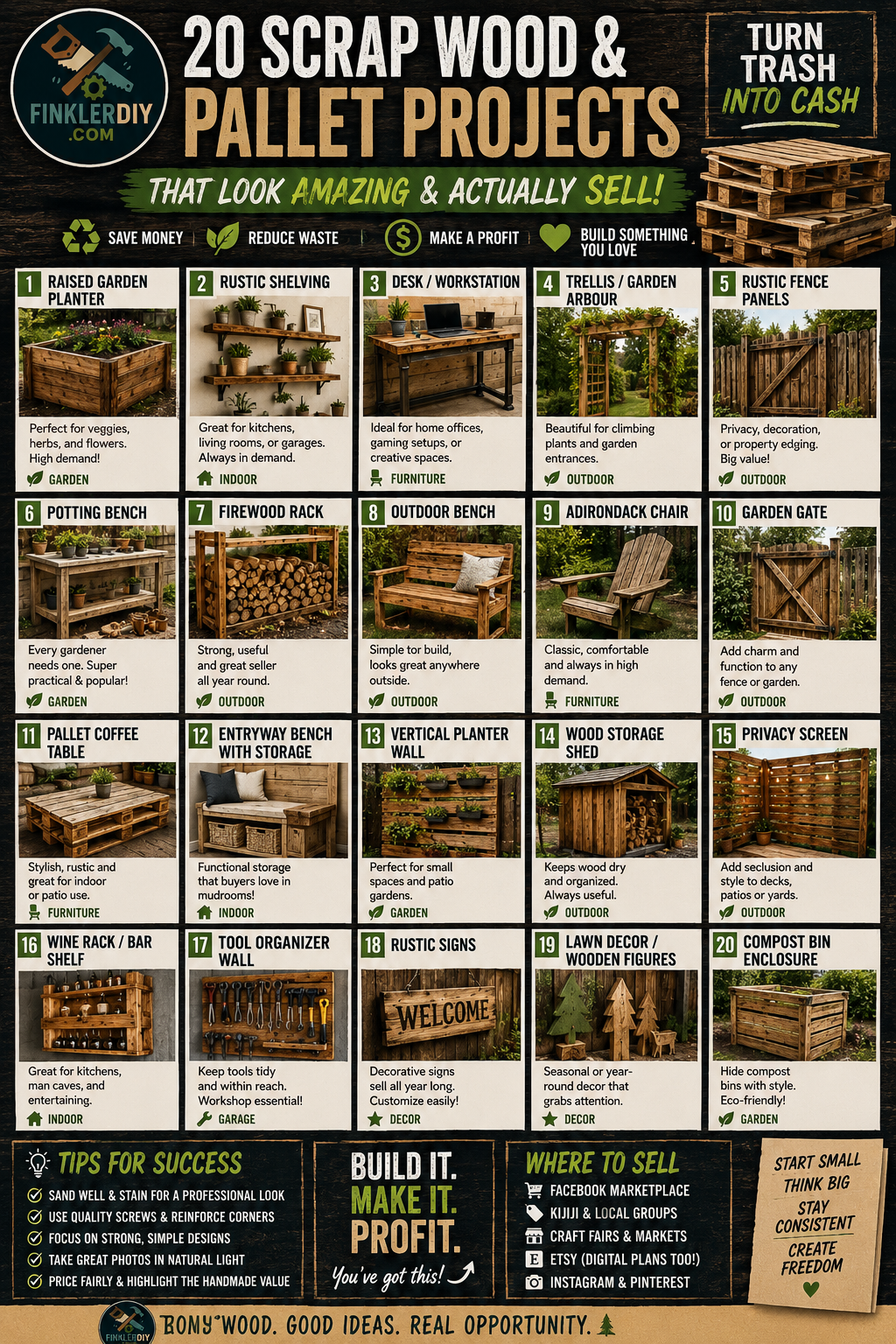
Firewood Racks, Potting Benches, and Utility Builds
Utility builds are projects designed primarily around usefulness rather than decoration. These projects may not seem glamorous initially, but many of them sell consistently because people genuinely need them.
Examples include:
- Firewood racks
- Potting benches
- Compost bin enclosures
- Tool organizers
- Garden workstations
- Hose holders
- Storage benches
- Lumber racks
A potting bench, for example, is basically a gardening workstation where people can transplant seedlings, organize tools, store soil, and work comfortably outdoors. They are surprisingly popular among gardeners because they combine functionality with rustic appearance.
Firewood racks are another underrated project because they feel visually large and useful while often remaining fairly straightforward to build. Strong simple utility builds frequently outperform overly complicated decorative projects because buyers can immediately understand their value.
Simple Outdoor Chairs Could Become a Strong Niche
Outdoor seating is another category with real potential. Many cheap plastic campfire chairs eventually crack, fade, or become unstable. Solid wooden outdoor chairs feel more permanent and substantial.
Simple Adirondack-style chairs remain extremely popular, although they involve more cutting and shaping than many beginner projects. More basic square-framed outdoor chairs can still work very well, especially if paired with rustic stain and sturdy construction.
Comfort becomes important here. Buyers may admire appearance initially, but if a chair feels awkward or unstable, perceived value drops immediately. Reinforcement matters heavily because chairs constantly experience shifting pressure and movement.
This is also where workflow repetition becomes powerful. The first chair may take a very long time. But once templates and measurement systems develop, production speed improves dramatically.
Decorative Signs and Lawn Decor Still Have a Market
Decorative projects may seem less practical, but they continue selling because they personalize outdoor spaces. Rustic signs, porch decorations, and lawn ornaments are especially popular in suburban and cottage areas.
Some examples include:
- Welcome signs
- Rustic address signs
- Wooden yard figures
- Seasonal porch decor
- Garden markers
- Cabin-style wall art
- Holiday decorations
This category works particularly well when combined with engraving, painting, wood burning, or layered designs. Handmade signs also allow builders to experiment creatively without requiring large amounts of material.
One major advantage is that smaller decorative projects are easier to transport, ship, and store compared to larger furniture builds.
Why Most Beginner Builders Underestimate the Learning Curve
Many people become discouraged because their first projects consume enormous amounts of time. Pallets split unexpectedly. Measurements drift slightly off. Boards warp. Screws crack wood. Sanding takes longer than expected. Stain behaves unpredictably.
But this is exactly how woodworking skill develops.
The first few projects teach:
- measuring accuracy
- cutting technique
- structural reinforcement
- finishing methods
- tool control
- assembly sequence
- workflow efficiency
After enough repetition, projects stop feeling chaotic. Builders begin anticipating problems before they happen. That is where real speed and confidence begin appearing.
The important thing is that woodworking compounds. Skills stack together over time. One successful planter teaches lessons that improve future shelves, desks, fences, benches, and gates.
Scrap Wood Starts Looking Different Once You Learn These Skills
One of the strangest things about woodworking is that it permanently changes how you see materials. Old pallets stop looking like garbage. Fallen trees begin looking like lumber. Leftover boards become future projects waiting to happen.
That shift in perspective is surprisingly powerful because it combines creativity with practicality. Instead of constantly consuming products, builders begin creating them. Instead of throwing materials away, they start seeing possibility hidden inside rough wood and discarded scraps.
At the same time, woodworking reconnects people to slower physical craftsmanship in a world increasingly dominated by screens and disposable products. Even small projects create a sense of accomplishment that many modern jobs rarely provide.
And perhaps most importantly, reclaimed wood projects prove that useful, beautiful things do not always require expensive materials. Sometimes a pile of rough pallets, a few tools, patience, sanding, and thoughtful finishing are enough to build something people genuinely value.
Final Verdict
Scrap wood woodworking remains one of the most accessible and rewarding forms of DIY building because the barrier to entry is surprisingly low. Many successful projects begin with little more than free pallets, leftover lumber, simple tools, and the willingness to learn through mistakes.
The projects that consistently succeed are usually practical rather than gimmicky. Raised planters, shelving, desks, fencing, trellises, utility builds, signs, and outdoor furniture solve real problems while fitting perfectly into current rustic and homesteading trends.
Perhaps the biggest surprise for many beginners is realizing that perfection is not always necessary. In rustic woodworking, controlled imperfection often becomes part of the appeal. Character, texture, grain variation, and handmade authenticity can make reclaimed wood feel more valuable rather than less.
Once those lessons begin clicking into place, scrap wood stops looking like junk entirely. It starts looking like inventory, opportunity, and future projects waiting to be built.